I know I’ve been promising an update for a while. Here’s an update, but since it’s been a while- it’s pretty long, so buckle in folks. Let me catch you up on the last two years.
For a while, I wasn’t sure why I had been hesitating so much to write one, but I think it’s because it’s been getting more and more difficult to continue to pretend like I’m thriving the way I want to, 7 years post-transplant.
Don’t get me wrong- I’m here. I survived. I’m grateful. According to my care team, I’m a success story who beat the odds, and overcame an unimaginable amount of complications and obstacles to get to the end. But, I think looking back, where I went wrong right from the start was believing there would be an end.
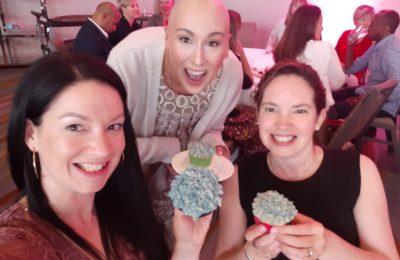
Today I attended the 4th annual Allergenic Blood and Bone Marrow Transplant Patient Survivorship Day. Not only did I host a photo booth for the event, but I also had the chance to sing some of the songs I’ve written while reflecting on my experience having a transplant.
This is one of my favourite days of the year because not only do I get the chance to thank the team who cared for me and saved my life (and has continued to care for me for the last 7 years) for everything they’ve done- but I get to be in the room with hundreds of other patients who’ve experienced the the roller coaster ride of transplant life and have come out the other end with a similar outlook to what I do. I like to call it- conflicted joy.
Transplant patients have a different sense of joy in their lives. We treasure each moment and every day like it could be our last, because we really know what it feels like to think that you’re on your last day.
We have spirits forged through fire. When we get through the worst of it, we carry an enduring sense of hope that no matter what comes our way, we can overcome (because we know how much we have already endured and how much strength and resilience that has given us).
We may still feel fear, but we know it has no power. We know that the only outcome of fear is regret. We feel it, and we let it go, and we bravely face any problem, dream, or goal with the unabashed belief that we will get the outcome we want.
But for many, hidden deep beneath all the joy, are intense feelings of grief, loss and disappointment. Feelings so difficult to carry and work through that radical acceptance was our only path back towards joy. We’ve accepted the cards we’ve been dealt and we’re excited for what the future holds- but we don’t have to like all of what’s happened to us or who we have become. We’ve just accepted it.
As I stood in that room- I was proud of where I am and felt grateful to see proof of so many survivors- some who had their transplants over 40 years ago. I felt inspired hearing pioneers in transplant medicine share studies that point towards a brighter future for the next generation of patients. I felt relieved and thrilled to see that psychological impacts and quality of life in survivorship has become a focal point of new care strategies and investments in the UHN network. But there was that conflicted joy again.
EVen though I felt all those wonderful things. Deep down I felt like a fraud. Showing myself as a success story when I didn’t feel like one. I believed there would be an end. From the outside looking in- I’m sure most of you thought that end happened years ago.
Originally, I believed the end would be a year after the transplant. That I’d be perfectly back to my old self. I would return to working, doing music, continuing to chase my dreams without really skipping a beat.
The end quickly got shifted by a year, then another, then another. Seven years later, I don’t even know where the end is anymore, and imagining there will be one mostly only brings me frustration because I know by now it’s easier to just accept the reality of my day-to-day life as it comes, without expectation. That way you can’t be disappointed.
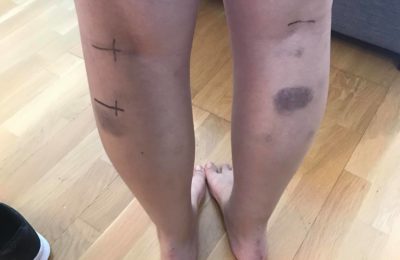
In the last 7 years, I’ve had 91 imaging appointments, with 4 more to go this year, and hundreds of doctor’s visits, including 89 in the last two years alone. After 12 tries and being told I was going to die from CMV- I overcame double drug resitant CMV with two compassionate bottles of non FDA Approved trial drugs. I’ve had both hips replaced- my left hip twice. I almost lost my right leg after a life threatening hematoma. I fought my way through being partially paralyzed and learning to write and walk again. I did endless physio to get my mobility back and 3 hours of therapy for 3 years straight to reclaim my mental health, my identity and my life.
In 2023, I’d faced the worst and was still standing. I felt like I had gotten as close to my old self as I was going to get, and I was okay with that. I thought that was the end. Then things started drifting downhill.
The symptoms started slowly, and much like my original diagnosis- did not seem connected. I wrote them off as casualties of my transplant: parts of my body that were just going to be more high maintenance moving forward. Radical Acceptance.
When I stopped being able to wear contacts at all and makeup started leaving my eyes perpetually dry I thought to myself ‘I guess I just have dry eyes now’
When I started getting musculoskeletal pain and chronic, debilitating headaches I thought I was just stressed and overworked.
When I started to gain weight and experience bloating so bad I looked like I was about to give birth, I thought it was menopause or thyroid problems.
Thanks to therapy (and radical acceptance), I long ago stopped believing that every pain and every symptom was a recurrence, that every small thing was a symptom of something life threatening and needed to be investigated. In 2023, I believed that I had gotten to the end.
But as things slowly slid downhill and I began to experience a wider constellation of symptoms like repeated sinus and chest infections, severe headaches, rashes and skin changes, I desperately tried to ignore them while I forged ahead with the second life I so fiercely wanted to be living. Until every alarm bell in my body was ringing and I could no longer ignore them or believe it was ‘just the way my body was now.’
As I began to raise these problems with my oncologist, each new symptom would bounce me to a new specialist- a total of 11 to narrow down what was happening. I felt like a ping-pong ball bouncing from one doctor to another, all using a microscope to look at one part of my body, declare that that part was not the culprit, and bounce me off to someone else. No one was looking at the bigger picture. It began to feel hopeless. Pointless.
There were times my quality of life began to feel so frustratingly limiting that I found myself considering MAID. It felt like cruel punishment that I had overcome so many of the most unbelievable challenges just to get to a point where, even though I had survived, my quality of life made life- not feel like it was worth living.
My new oncologist is such a lovely and wonderful guy. He’s endlessly positive and always gives me hope, so much hope that it took two years of fumbling through specialists to get so frustrated and overwhelmed that I marched into his office in May and told him he wasn’t allowed to interrupt me while I read my three-page manifesto to him.
I detailed how bad my quality of life was and how, even after all the mental health work I’ve done, my situational and physical challenges made it difficult to not feel defeated and depressed.
How my physical and mobility limitations made it difficult to do the things I wanted to do, not just in my job or career, but for my own physical health. How the compiling symptoms were ruining my second life. That I had stopped performing. Stopped chasing my dreams. That I was on the verge of giving up.
I honestly explained how difficult it was to hear my team call me a success story at every visit, knowing I was considering choosing to end my own life- because I could no longer chew on the bitter taste of disappointment. The disappointment I felt as I now looked back at my first life and the second life I dreamed of living (the visions of which kept me alive through my darkest days). It felt like not only did I lose the me I was before my transplant, but that the me I dreamed of being after my transplant, was slipping out of grasp.
I questioned whether I had acquired a secondary immunodeficiency disorder. Whether my cancer was back. I asked if my graft-versus-host disease had returned. Each time I asked questions like these, the answers were ones I am oh-so familiar with. ‘That’s so unlikely’. ‘That would be incredibly rare at this point in your recovery’. ‘The odds of that are so low’.
Well, if you know me and you know my whole story, I’m one of those people who always beats the odds…but not always in the best way.
I stared across from him as tears streamed down my face. He looked at me stunned- since he has mostly only seen the hopeful, positive version of me, while I begged for him to not give up on me. That I was losing hope, and I was running out of the will to fight and I needed him to walk me through this darkness in search of the real end.
I reminded him that I deeply understood my body and could interpret its signals, and that I knew something was wrong, and I needed someone to believe me and to keep looking until we found answers.
He agreed to not give up, (because he is wonderful) and we worked out that the next specialists on the list would be a GI specialist and an endocrinologist. (12+13)
At my first visit with the GI specialist, while I was describing my symptoms, he mentioned that some of them sounded like they could in fact, actually be graft-versus-host disease and that given my history of acute graft-versus-host disease post-transplant, it would be prudent to do a colonoscopy and gastroscopy to look at what was happening and take some biopsies to rule it out.
After 12 specialists, we finally had a piece of the puzzle. My oesophagus was extremely damaged from the unrelenting heartburn I’d been experiencing- and they found graft-versus-host disease in my intestines and colon.
Graft VS Host Disease can occur in solid organ transplants where someone rejects a single organ.
In the transplant world GVHD can attack any of your organs, muscles, or tissues- usually multiple places at once. The donor cells recognise your originating body parts as being foreign and attack. Post-transplant, this condition is oddly desired- but can quickly become a slippery slope that is difficult to manage.
It is desired because, in the acute phase, GVHD doesn’t just attack the patient’s body; it attacks any remaining cancer cells and kills them. In my case, I was not cancer-free post-transplant. I only became cancer-free after developing severe acute graft-versus-host disease, which triggered the condition called graft-versus-leukaemia that killed my remaining cancer cells and pushed me into remission.
It is a slippery slope because when it becomes too strong, it can cause you to reject your transplant, lose a functioning organ, or develop crippling auto-immune like medical conditions that behave like a whack-a-mole. As you treat one place it pops up somewhere else.
In my case, my acute GVHD attacked many parts of my body- skin, stomach, intestines, eyes, mouth, intestines, genital tract and liver. Once it hit my liver and things started going from bad to worse- the decision my doctor had to make seemed alarmingly simple: treat it with high dose steroids that will probably destroy your hips and make you gain weight because you can lose the weight and we can replace your hips easily but- we can’t replace your liver.
It took over 2 years to get it under control and it destroyed my body. Then the reaction eventually burned itself out and it looked like I was in the clear.
To look at my biopsy results and see it had returned hit me like a train- A train of triggered PTSD. Suddenly, I was worrying: if I had graft-versus-host again- Would it cause me to lose my graft?
Would I need another transplant?
Could I even survive another transplant?
Would I even want one?
Or equally worse- would I need steroids again?
Could my body even handle gaining more weight?
How badly would my body react and what bones would disintegrate this time around?
Would I need immunosuppressants?
Would I have to live in isolation again?
My head was swirling with questions when I finally sat down with my oncologist to ask him all of these questions. I was prepared for the worst and even though it wasn’t the worst, it wasn’t the best either.
When GVHD returns in the chronic phase- it behaves differently than acute. It usually hangs out in stage one and two without progressing to the point of threatening the bond of your transplant or severely attacking your organs enough to threaten your life. I would not need another transplant. I could not take steroids or immunosuppressants unless my life was at stake due to my last experience.
Instead, the small percentage of people who develop chronic GVHD essentially live with auto-immune like symptoms across whatever organs, muscles or tissues are affected without much treatment available.
We could treat the individual symptoms as much as possible with medication (ugh) but first we would need to find everywhere else it was so I would need to return to most of those specialists and some new ones to specifically look for that this time around.
Lastly- this could not explain all of my symptoms. I was likely experiencing a complex web of systemic and immunological processes that were making it difficult to find a single cause- because there isn’t one. There are multiple things at play. In order to figure them out we needed to find all the GVHD first.
As we pored over my running list of symptoms it became obvious my eye problems were GVHD and I was referred to a GVHD Opthamologist.
My chronic headaches, muscle seizing and musculoskeletal pain was also likely GVHD and I was referred for imaging and to an oncology pain specialist.
My mouth came into question and after ct scans of my dental implants we discovered that I’d lost so much bone density in my jaw an implant had become dislodged and left a hole in my jaw between my mouth and sinuses. After removing it my repeated sinus infections finally stopped.
I am waiting to see specialists about my skin, joints, fascia and muscles and am waiting for imaging on my brain, spine and shoulders and pancreas.
It wasn’t the worst news- but it wasn’t the best. To basically be told you’re not going to die, but there also isn’t a lot we can do. We can try to improve your quality of life a bit, but prepare to suck up the pain and push down the bitterness, because life may not look the way you wanted and you’re going to need….radical acceptance.
Along with my transplant related side effects, I had been experiencing growing pain in my left hip.
My first left hip replacement caused significant chronic pain and it was determined that the cup and ball used were too large and impinging several tendons causing chronic pain. This led to a left hip revision at the same time as my right hip was replacement. The pain did not go away. It changed a bit but did not go away. Ever since it has slowly become worse.
You’ve all seen my awkward limp for the first 5-10 minutes I’m walking after sitting down, but over the last year it’s become extremely painful and limiting. It is difficult to bend over my legs past a 90. To put shoes or socks on.
My photobooth job has me lifting large amounts of weight, bending and squatting in ways that creates pain and pressure that builds with each bend and lasts for hours. For the last few months when I get home from an event I need a walker to get out of my car and in the house and sometimes need it for half of the next day until the pain subsides. It was taking longer and longer for the pain to go away while walking.
We initially thought that this pain was originating from the same place as after the first hip- the iliopsoas tendon. Acting on this assumption we’ve frozen the tendon twice which has resulted in drastic pain relief. We discussed cutting the tendon but I was wary of more surgery and thought if I toughed it out and did more physio it would improve. I didn’t want to have permanent weakness. So I waited but the pain did not improve.
I made an appointment to see my surgeon to check on my knees, and while I was there mentioned the growing hip pain. I told him I was in so much pain so often I would rather just cut the tendon and be weak, than be weak and in pain.
After they imaged both knees and hips- I was stunned when he sat down and showed me my most recent x-ray compared to post second surgery. It was subtle but still noticeable. The cup on my left hip looked like it was in a different place. The gap they had left the second time when they had to screw in a cup smaller than the hole they reamed for the too-large initial cup was gone. The whole angle was slightly different.
He said was no longer certain the tendon was the issue- the cup looked like it was no longer anchored and had shifted. The pain I described when standing up and initially moving that slowly faded was called ‘start up pain’ and was a hallmark sign of acetabular cup loosening.
When I bend, or squat instead of the ball moving inside of the cup, both the cup and the ball are moving directly against my bone. As I stand straight and walk on no incline, the cup slowly settles into place from the weight of my body and the consistent angle and the pain eventually subsides.
He suspected that when we froze the tendon- since it is so close to the cup and the freezing is liquid that the pain relief I felt was actually from the freezing entering the space around the cup. He didn’t feel comfortable moving forward with cutting a tendon that would cause permanent weakness any more without being absolutely sure it was the cause.
So I now await what is called an SPECT/CT Scan- which combines a regular CT Scan with a 3D nuclear bone scan to find the size and location of the ‘hot spots’ (Where the cup is rubbing against the bone aka how much is not anchored).
This will tell us if that is the real problem and it will show us how much bone we have left to work with because my second implant was angled differently than my first to try and avoid impingement a second time and the x-ray angle makes it hard to tell how much bone we have left to work with if the issue is the cup and it needs to be done again. Right now it looks like not much- but inside I cling to the hope that miracles happen and that if there is enough bone left to work with I might end up pain free and with full mobility back.
As I celebrated 7 years of survival, I felt the all too familiar conflicted joy.
Joy to be alive, but deep pain to feel I have not reached the full potential of my second life. I feel ashamed because I envisioned being this pretty, perfect example of a survivor who overcame the odds and returned to her original life unscathed and improved.
Like a child who wants to make their parents proud I so desperately wanted to pay all of the people who prayed for me and cheered me on and supported me that it was all worth it. That I made something of myself.
Instead I feel trapped in a shell of the hollow second life I dreamt of, feeling like everything I imagined is slipping away. I feel lost. I am tired of radically accepting a life that doesn’t live up to my expectations; of pushing myself so hard to make something out of this second life that I feel exhausted and defeated.
But nevertheless- even though conflicted, there is still joy. There is still hope. I will not give up. I have not come this far to back down. I will bravely face these problems with the unabashed belief that I will get the outcome I want- no matter how long it takes.